
Balance & Gait Training
Balance and Fall Prevention: HowPhysical Therapy Helps You StaySteady on Your Feet
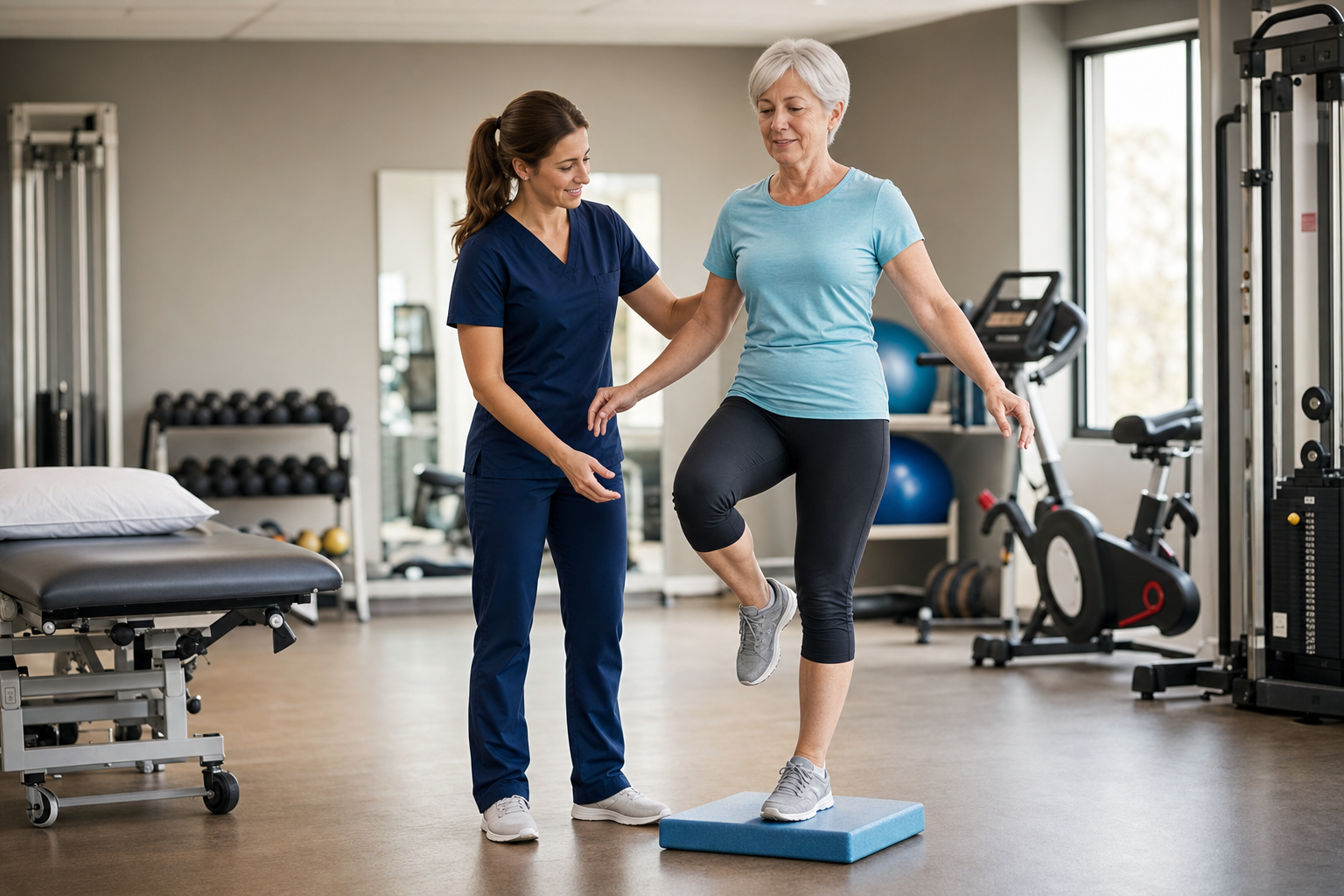
A single stumble can change your confidence overnight. Whether you have noticed unsteadiness on uneven sidewalks, hesitation on stairs, or a recent fall that shook your trust in movement, balance problems are common — and treatable.
At Riverbend Physical Therapy, balance and gait training is one of the most practical ways we help patients across River Ridge, Metairie, New Orleans, Covington, Mandeville, and Madisonville move with less fear and more control in real life, not just in the clinic.
Why Balance Declines (and Why It Is Not “Just Aging”)
Balance depends on a team effort from your vision, inner ear (vestibular system), sensation in your feet, joint mobility, and core or hip strength. When one part of that system weakens after injury, surgery, illness, or a stretch of inactivity, your body compensates — often with shorter steps, wider stance, or looking down constantly.
Common contributors we see in the clinic include:
Lower-body weakness — especially in the hips and ankles after knee surgery or
arthritis flare-ups.
Reduced mobility — stiff ankles, tight calves, or limited hip motion that
changes how you walk.
Medication or medical changes — which can affect alertness or blood pressure
when standing.
Environmental habits — dim lighting, throw rugs, rushed transitions from sit to
stand, or fatigue at the end of the day.
The good news: targeted physical therapy can retrain these systems together so steadiness improves step by step.
What Balance and Gait Training Looks Like at Riverbend
Effective fall prevention is not about standing on one foot for minutes on a wobble board and calling it done. Your plan should match your goals — returning to yard work, keeping up with grandchildren, walking the dog, or simply getting to the bathroom at night without grabbing every piece of furniture along the way.
A typical Riverbend program may include:
Gait analysis — We observe how you walk, where you shorten your stride, and
whether you lean or rotate to avoid pain.
Strength and control drills — Hips, ankles, and core work that support stable
landings and safer direction changes.
Balance progressions — From supported challenges to dynamic tasks like reaching,
stepping over obstacles, or reacting to gentle perturbations.
Functional practice — Stairs, curbs, uneven surfaces, and dual-task training
(moving while talking or carrying light items).
Home safety education — Practical changes that reduce trip hazards without
turning your house into a hospital room.
Sessions stay hands-on and progressive. You should leave knowing what to practice between visits and why each exercise connects to daily life.
Who Benefits Most from Fall Prevention PT?
Balance therapy helps a wide range of patients, including:
Adults recovering from knee or hip surgery who feel unsteady during the first
weeks of weight-bearing.
People with chronic ankle sprains or foot pain that changed how they trust each
step.
Older adults who want to maintain independence and reduce serious fall risk.
Active adults dealing with vertigo-like symptoms or dizziness when turning the
head — we coordinate care and focus on the musculoskeletal pieces we treat best.
Anyone who has already fallen once and does not want a repeat injury or fracture.
If you are unsure whether your unsteadiness is “bad enough” for therapy, that hesitation itself is worth a conversation. Early training often prevents bigger setbacks later.
Simple Habits That Support Your Rehab Progress
While your therapist builds a custom plan, these habits reinforce clinic gains at home:
Practice standing tall — Imagine a string lifting the crown of your head; avoid
permanent “furniture surfing” by gradually reducing hand support as exercises allow.
Keep moving through the day — Short, frequent walks beat one long burst that
leaves you exhausted and sloppy-footed.
Light up pathways — Night trips to the kitchen are high-risk; add night-lights
along common routes.
Wear supportive footwear — Save floppy slippers for seated relaxation, not
household chores.
Report vision or medication changes — Your PT plan may adjust when inputs to
balance shift.
What Progress Can Look Like
Goals are personal, but patients often notice milestones such as:
Confidence on stairs without a death-grip on the railing.
Ability to walk on grass, driveways, or clinic parking lots without scanning every crack.
Faster reactions when bumped or when the dog crosses their path.
Less reliance on a shopping cart or grocery wall for balance.
Return to exercise classes, golf, fishing, church activities, or travel they had been avoiding.
Progress is measurable — stride length, timed up-and-go tests, single-leg stance tolerance, and symptom questionnaires all help track real improvement, not just a vague “feeling better.”
When to Schedule an Evaluation
Consider booking a physical therapy evaluation if you have had a fall in the past year, feel unsteady when turning quickly, avoid activities you used to enjoy, or rely on family to steady you during outings. You do not need a referral for many plans — our team can help verify benefits before your first visit.
Ready to move with more confidence? Explore our knee and lower-body rehab programs, full therapy services, or request an appointment at the Riverbend location nearest you.